Cold Sidewalks, Careful Steps: Supporting a Senior Dog's Mobility Through an Upper East Side Winter
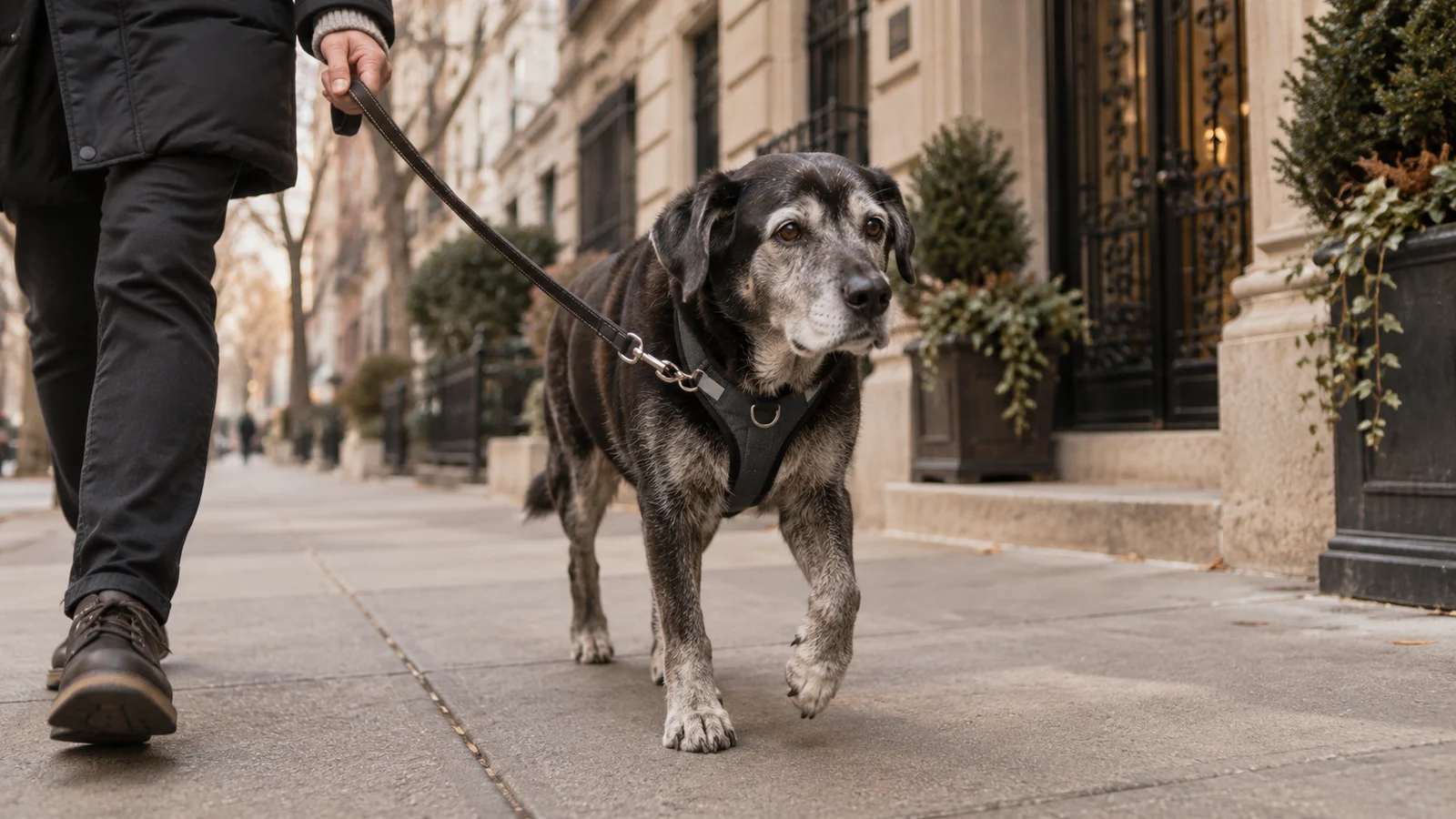
Winter on the Upper East Side brings a particular kind of friction for older dogs. It isn’t just the temperature — it’s the combination of cold pavement, rock salt outside doorman buildings, and wide, wind-exposed avenues near the park and the river. For a senior dog already moving a little slower than he used to, these conditions can turn a familiar walk into something more hesitant.
Why Cold Weather Affects an Older Dog’s Movement
Cold reduces blood flow to the joints and muscles, which can make a senior dog’s movement feel stiffer, especially in the first minutes outside. This isn’t a diagnosis — it’s a well-documented pattern in aging dogs, and it shows up as observable behavior: a slower start to the walk, a shorter stride, more caution on uneven ground. If a change in movement is sudden or pronounced rather than gradual and seasonal, that’s a conversation for a veterinarian first, before anything else.
Signs a Pet Parent on the UES Might Notice
- A slower pace out of the building, particularly when the doorman opens the door to a gust of cold air
- Hesitation at the curb, especially where salt has been applied to the sidewalk
- Shorter strides or a more deliberate gait on the return walk, once initial stiffness has had time to ease
- Reluctance on stairs in a walk-up, more so than in an elevator building
- A shorter overall walk before the dog seems ready to head back inside
What a Thoughtful Winter Routine Looks Like
A considered winter routine for a senior dog on the Upper East Side isn’t about pushing through — it’s about adjusting the shape of the walk itself. That means shorter, unhurried outings instead of one long loop. It means route planning that favors sidewalks with less salt buildup where possible, and avoiding icy patches near curb cuts.
In prewar walk-ups, it means pacing the stairs deliberately rather than rushing; in elevator buildings, it means giving the dog a moment to settle before stepping into the cold.
Consistent timing — walking at the same points in the day — also helps a senior dog anticipate and adjust, rather than being caught off guard by the temperature drop each time.
Care shaped around an older dog’s pace, comfort, and routine.
Explore Senior & Mobility CareHow We Approach Senior & Mobility Care
Our Senior & Mobility Care visits are built around individualized pacing, not a fixed route or a fixed pace. Walkers observe how a dog is moving that day and adjust accordingly — slower starts, shorter distances, more frequent pauses when needed. Equipment is kept gentle and front-clip, chosen for stability rather than control. Communication with pet parents is part of the visit: if a walker notices a change worth mentioning, they mention it.
Frequently Asked Questions
Do you adjust routes for ice and salt?
Yes. Walkers plan routes with footing in mind, particularly in the coldest weeks, and avoid areas with heavy salt application when a reasonable alternative exists.
What if my dog can’t manage the stairs anymore?
We adapt to the building and the dog — pacing stairs deliberately, using elevators where available, and keeping the visit unhurried. For dogs with more significant mobility changes, we recommend a conversation with your veterinarian to guide the approach alongside our care.
Is this a medical service?
No. Senior & Mobility Care is a non-medical, observation-based walking and companionship service built around comfort and pacing. It doesn’t replace veterinary care.
Thinking about winter support for an older dog?
Explore Senior & Mobility Care