Hidden in the Leaf Litter: The Fall Mushroom Risk in Manhattan's Parks
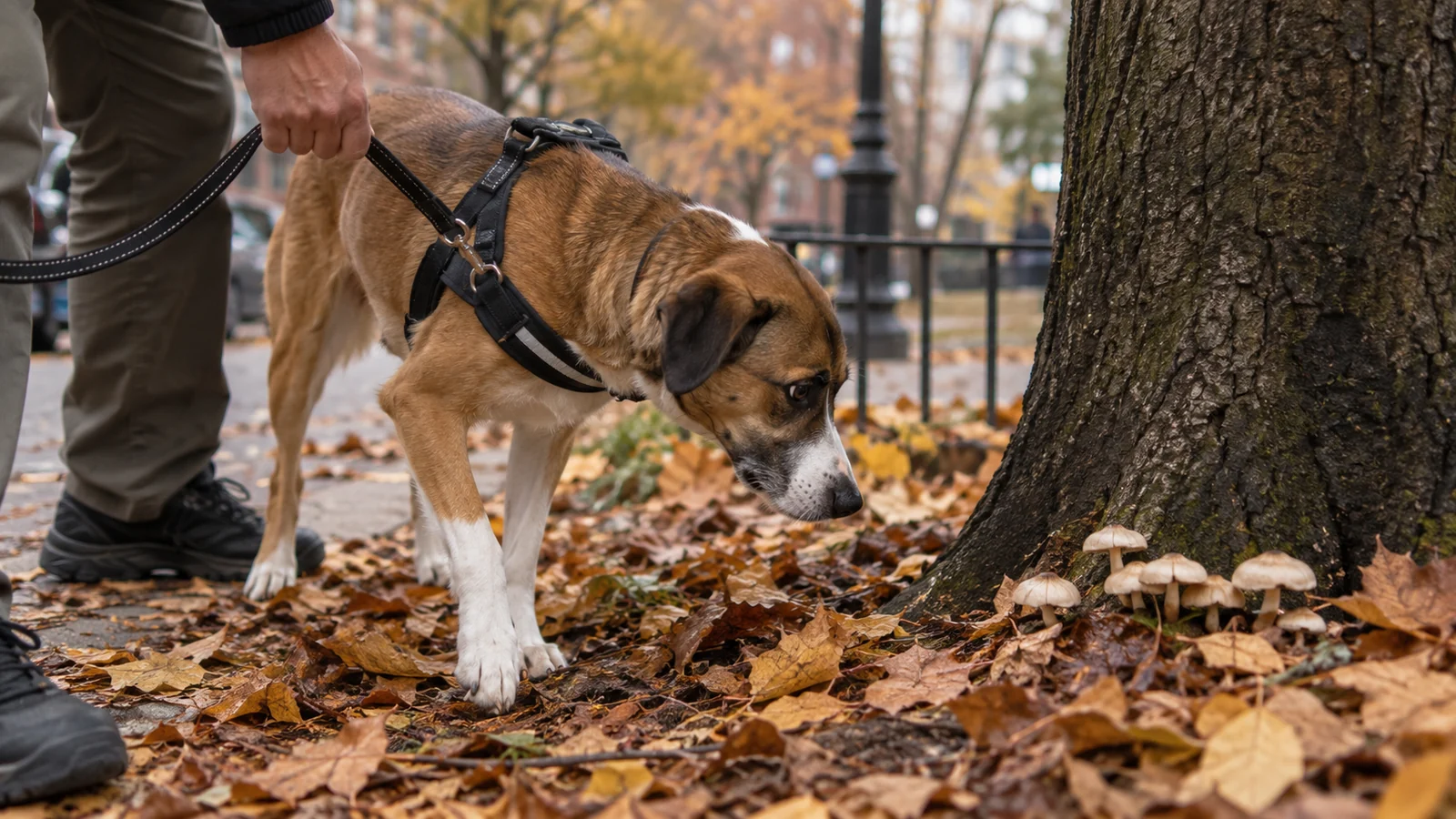
Every autumn, the same pattern repeats in Central Park and Riverside Park: a stretch of rain, followed within days by a visible flush of wild mushrooms in shaded tree pits, mulch beds, and leaf-covered ground near the base of older trees. Most of these mushrooms are harmless. A small number are not, and the ones that are dangerous tend to be the ones dogs find first.
Why Dogs Are Drawn to Them Specifically
Dogs investigate the world primarily through scent, and several of the more concerning wild mushroom species — including those in the amanita family, responsible for the most serious cases of mushroom-related liver toxicity in dogs — appear to be genuinely attractive to a dog’s nose in a way they are not to a human’s.
Combine that with a thick layer of fallen October leaves that hides a mushroom’s cap until a dog is already standing on top of it, and the risk becomes one of proximity as much as identification.
Why Delayed Symptoms Make This Especially Deceptive
The most dangerous mushrooms do not announce themselves quickly. With amanita-family ingestion, initial gastrointestinal signs can take six to twelve hours to appear, and by the time they do, meaningful liver involvement may already be underway.
An owner who sees no immediate reaction after a park walk may reasonably assume nothing happened — which is precisely the false sense of security that makes this category of ingestion so serious.
The Practical Standard on a Walk
Identification is not the handler’s job in the field, and attempting it wastes time that matters.
The working rule is simpler: any mushroom cluster gets a wide berth, full stop, regardless of how harmless it looks.
On leash, that means proactively redirecting a dog’s attention away from clusters at the base of trees and along mulch beds before the dog’s nose gets there, rather than reacting after the fact.
If Ingestion Is Suspected
Any suspected mushroom ingestion should be treated as an urgent veterinary matter, not a wait-and-see situation.
Contact a veterinarian or an animal poison control line immediately, and bring a photo of the mushroom if one is available — identification can meaningfully change how quickly a vet needs to act.
Want walks handled with this level of attention?
Ask about our leash-attentive walking routes