The End of Daylight Saving Time: A Manhattan Dog Walker's Guide to Safe Evening Routes
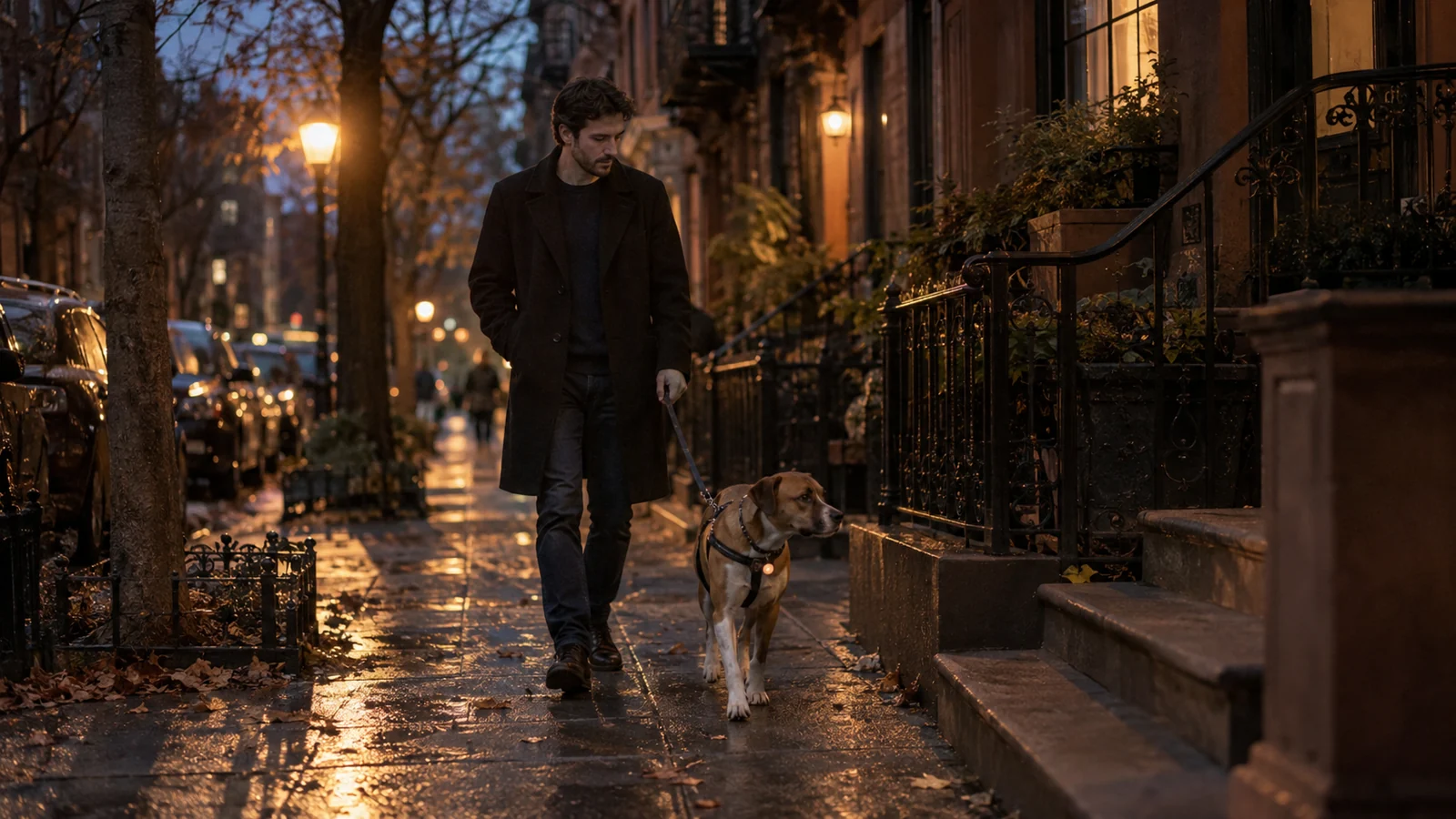
On November 1, the clocks fall back and Manhattan loses an hour of afternoon light almost overnight. Walks that used to end in a soft, golden dusk suddenly happen in full darkness. For a dog, nothing about the routine has changed — but everything about the street has. Safe evening walking in this new light takes more than a reflective clip. It takes a different route, a different pace, and a different kind of attention.
Why the Transition Matters More Here Than Elsewhere
In much of the country, an early sunset simply means turning on a porch light. In the West Village, the same hour brings narrow sidewalks, uneven cobblestones, slick autumn leaves, and delivery cyclists moving fast between pools of streetlight. Headlights reflect off wet pavement and wash out the low-contrast shapes a dog reads to feel secure. Rush hour and darkness now overlap, so the busiest, most crowded stretch of the evening is also the least visible one.
That combination is why the end of daylight saving time deserves a real plan here, not just a gear upgrade. The city gives a dog far less margin for error after dark, and the walker has to close that gap deliberately.
Adjusting the Route, Not the Dog
A dog should never be asked to “get used to” a route that has become harder to navigate. The route is what changes. After the time shift, we favor well-lit avenues over dim side streets, keep to familiar paths where the dog already knows the corners, and steer clear of scaffolding shadows and construction zones that swallow light. Shorter, better-lit loops beat a long walk through darkness every time.
Crossings matter just as much. We cross at lit intersections rather than mid-block, give parked delivery vans a wide berth, and slow the whole walk down so a startled dog always has room to reset. Quality over quantity is not a slogan on nights like these — it is the safest way to move.
Visibility as a Piece of Standard Kit
Once the sun sets before dinner, reflective and illuminated gear stops being an accessory and becomes standard kit. A good reflective leash keeps the line between handler and dog visible to drivers and cyclists, while a clip-on LED collar light marks the dog itself in the seconds that count. For dogs who pull or who blend into dark pavement, a reflective harness adds a broad, easy-to-see surface. The walker should be lit up too — a driver who sees the person early sees the dog early.
Reading the Dog, Not Just the Street
Gear and routes handle the street. The rest is attention. In low light a dog communicates through subtle shifts — a hesitation at a dark doorway, a flinch as a cyclist passes, a change of pace near a noisy grate. A walker who knows a particular dog notices those signals early and adjusts before they become fear. That is the difference between a walk that happens to a dog and a walk that is shaped around it.
Every dog reads the dark differently. A confident young retriever and an anxious senior need entirely different handling on the same block, and the season is a good reminder that attention, not autopilot, is what keeps evening walks calm.
The end of daylight saving time does not have to make evening walks stressful. With the right route, the right visibility, and a walker who is genuinely paying attention, the darker months can be just as steady and enjoyable as the long days of summer. That steadiness — care and consistency, one dog at a time — is the standard we hold to all year.
Planning ahead for the darker evenings?
Book a consultation for evening dog walks